
Causes of Fusarium Basal Rot
This disease is caused by the fungus Fusarium oxysporum f. sp. cepae. 🧅
The fungus primarily enters the plant through a few key pathways:
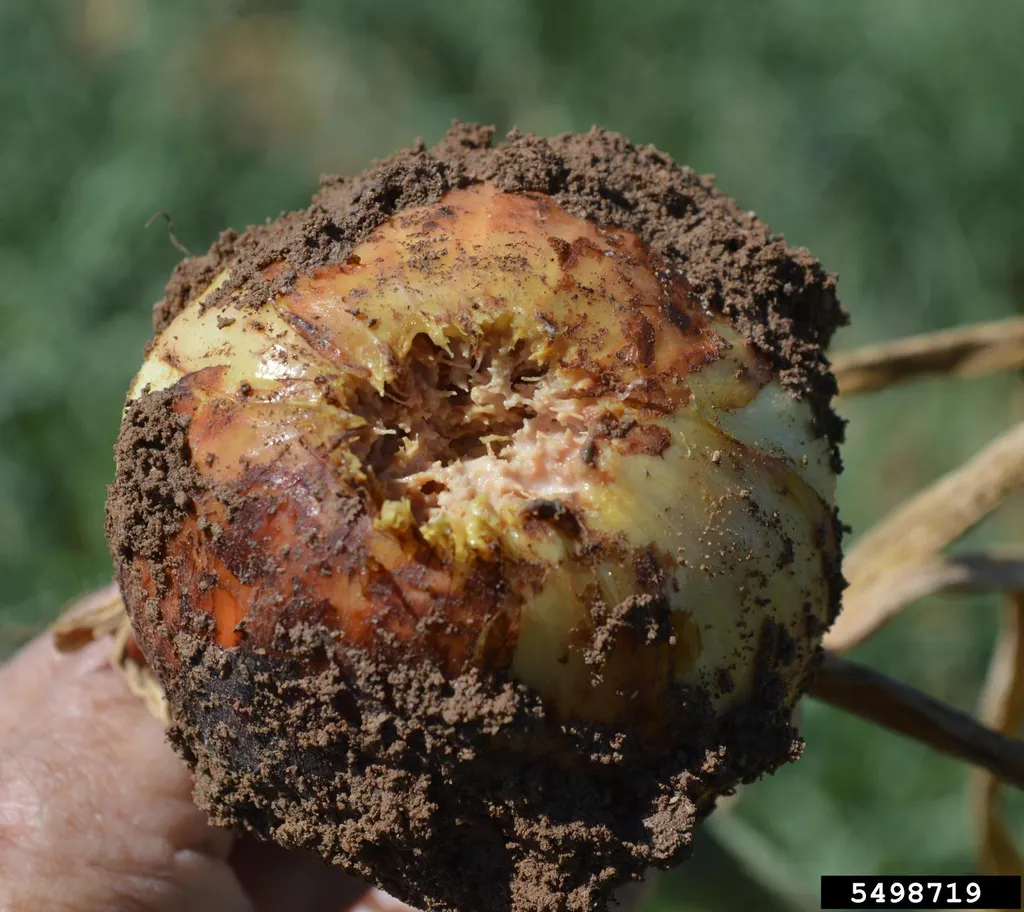
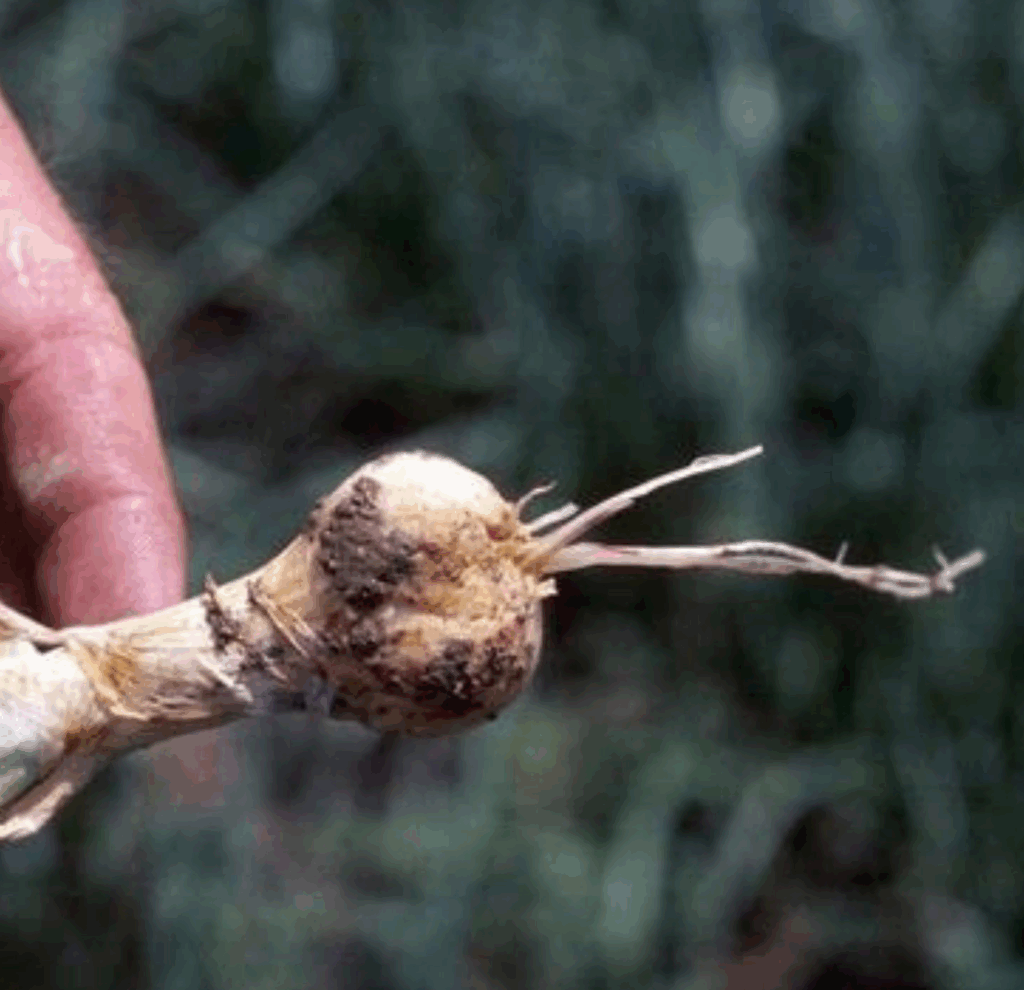
- Through the Basal Plate: The fungus directly infects the “basal plate,” which is the hard, plate-like area at the bottom of the onion bulb where the roots emerge.
- Wounds as an Entry Point: Any damage or wound to the basal plate significantly increases the risk of infection. The fungus can also spread through the soil, infecting the roots and basal plates of neighboring plants.
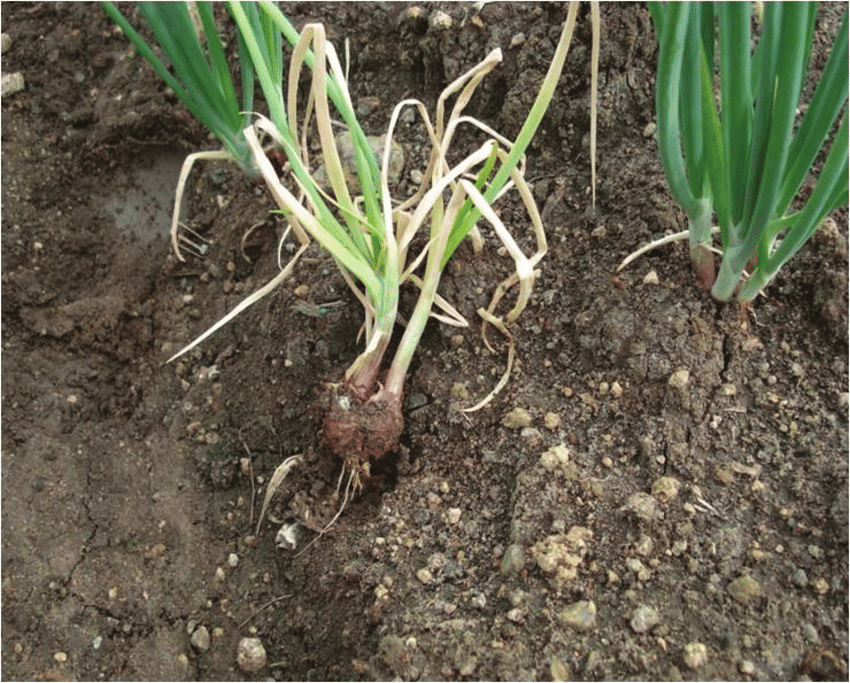
Once inside, the fungus rots the basal plate, severing the connection between the roots and the bulb. This cuts off the plant’s supply of water and nutrients, causing the leaves to turn yellow and die back, which stunts the plant’s growth.
Ideal Environment for Fusarium Basal Rot
This disease is primarily triggered by warm soil temperatures.
- Temperature: The ideal temperature range for disease development is 25°C to 29°C. The disease is rarely a concern in cooler soil temperatures below 15°C.
- Continuous Cropping: Similar to other soil-borne diseases, planting onions in the same field year after year can lead to dangerously high populations of the Fusarium fungus.
Integrated Management: The Best Control
- Crop Rotation: The most effective way to reduce the Fusarium population in the soil is to rotate with non-host crops (like corn, lettuce, or cereals) for at least four years.
- Planting Time: In regions with hot summers, plant earlier in the season so the crop can mature before soil temperatures get too high, minimizing disease pressure.
- Enhance Soil Health: Healthy, well-draining soil fosters robust root systems that are more resistant to infection.
- Fungicides: To protect the roots and basal plate, fungicides specifically for Fusarium should be applied to the soil via spraying or drenching.
The Role of Nano Silver (Siller-100)
- Nano Silver: Nano silver is an effective disinfectant for soil. Its microscopic particles can actively destroy the Fusarium fungus when applied as a drench. Its ability to disrupt the fungus’s cell walls and metabolism provides strong protection for the roots, especially when seedlings are still vulnerable.
Leave a Reply