
Ever noticed your green chili plants looking like they’ve been dusted with flour? That’s not a kitchen mishap—it’s powdery mildew, a common and stubborn fungal disease. But don’t worry, you don’t have to surrender your crop! In this guide, we’ll help you understand what this pesky fungus is, how it spreads, and what you can do about it, from simple fixes to cutting-edge tech.
What’s Happening to My Plant? The Powdery Mildew Breakdown
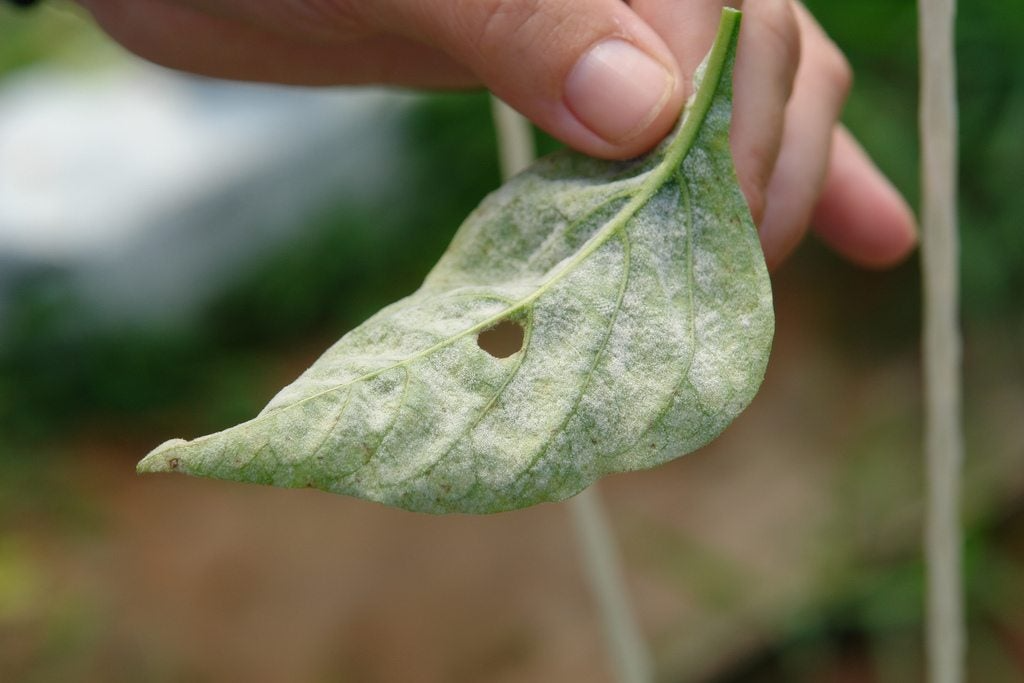
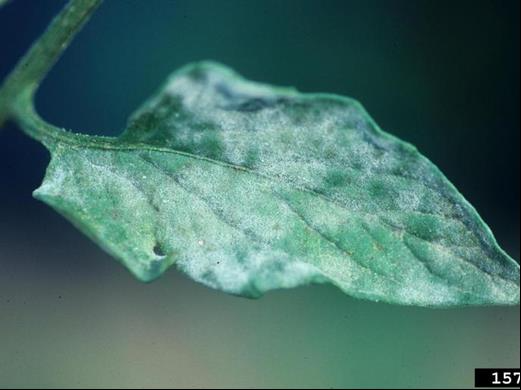
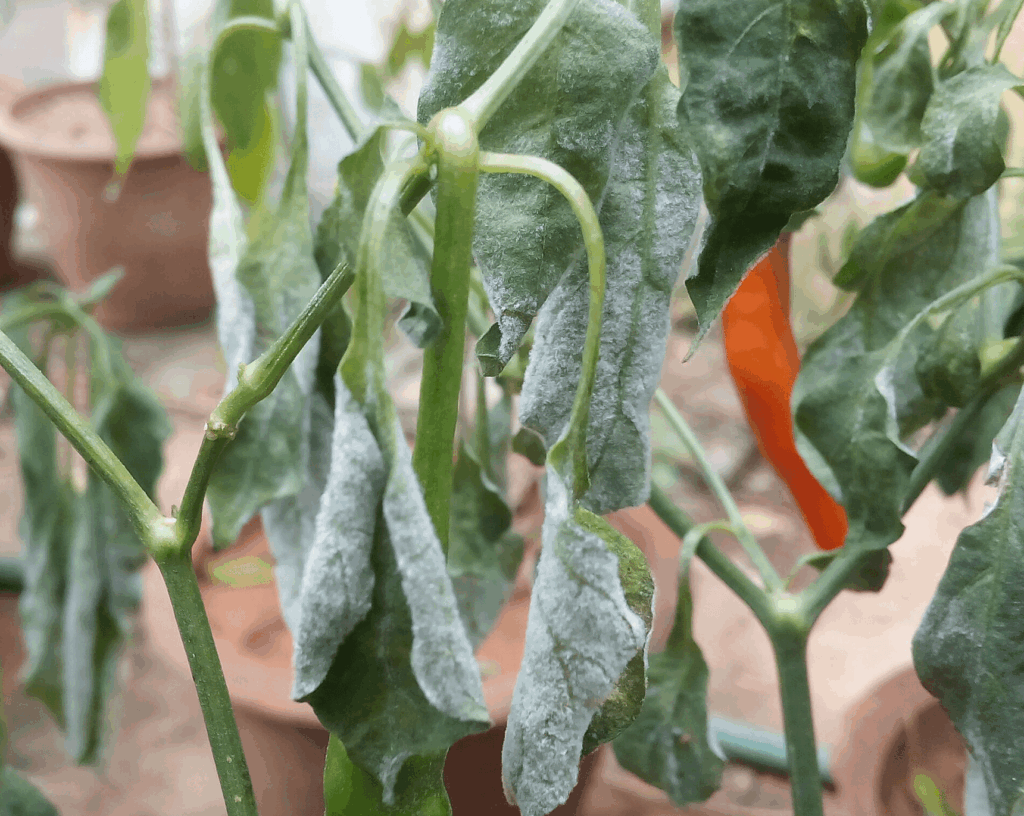
Powdery mildew on green chili plants is caused by a fungus called Leveillula taurica. It shows up as white, powdery spots on leaves, stems, and sometimes even the chilies themselves. If you ignore it, the leaves can shrivel and fall off, leaving your precious peppers exposed to the sun and ruining your harvest.
The Perfect Storm: Why Powdery Mildew Loves Your Garden
This fungus is a master of survival. While many fungi need a lot of water to thrive, powdery mildew prefers warm, dry conditions with high humidity. It’s a bit of a paradox! It loves temperatures between 60°F and 77°F (15°C to 25°C) but gets a little shy when temperatures soar above 95°F (35°C).
Interactive Poll: Do you live in a climate with hot, dry days and humid nights? (Yes/No)
Your Game Plan: Simple Steps to Keep Your Plants Healthy
Prevention is always easier than a cure. Here are some simple, low-tech ways to fight back:
- Give Them Space: Proper air circulation is key. Make sure your plants aren’t too crowded.
- Trim It Up: Prune away any thick, bushy sections to help air flow through the plant.
- Watch How You Water: Water at the base of the plant, not on the leaves, and avoid watering late in the day.
- Choose Wisely: Next time you plant, look for chili varieties that are resistant to powdery mildew.
- Try DIY Remedies: Solutions like baking soda or diluted milk sprays can be effective if you catch the problem early.
Share Your Tip: What’s your go-to home remedy for powdery mildew? Let us know in the comments!
The Future is Here: Nanotechnology to the Rescue
For a more advanced approach, we are now using silver nanoparticles (Pensil) to fight powdery mildew. This is a game-changer for high-value crops like green chilies.
- Nano Silver: Think of these as tiny silver bullets for the fungus. They release silver ions that disrupt the fungus’s metabolism and literally suffocate its cells. They can even damage the fungus’s DNA, preventing it from reproducing.
Using the silver nanoparticles (Pensil) is a more sustainable option, as it is effective in much smaller amounts than traditional fungicides. It’s a glimpse into the future of farming!
Final Thought: Whether you use a simple spray or a high-tech solution, staying ahead of powdery mildew is crucial for a healthy and abundant green chili harvest. What step will you take first to protect your plants?